

What are corporate events?
Corporate events are an essential part of the marketing mix for any organization. They serve multiple purposes—from leadership conferences and incentive travel to experiential marketing and business networking. These events also play a key role in employee engagement.
The variety of event sizes, goals, and budgets makes execution a detailed process. From selecting the venue and menu to finalizing décor, branding, and engagement strategies, every element contributes to the final experience. Explore our corporate event services to understand the complete scope.
Corporate event management involves planning and executing business events to meet specific brand, marketing, or internal objectives. Professional planners bring expertise, vendor networks, and execution capabilities to ensure smooth delivery.
Common formats include conferences, brand activations, employee engagement programs, incentive trips, and town halls. Below are practical tips to make your event successful.
Top 10 corporate event planning tips
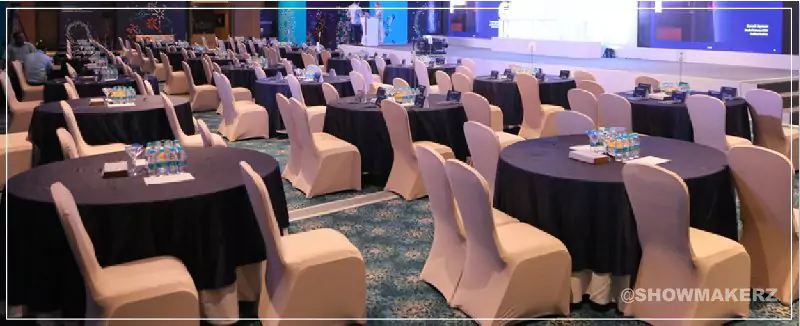
1. Identify event goals
Define the objective—networking, product launch, team bonding, or brand awareness. A clear goal aligns all decisions.
Clear objectives help streamline planning and improve event outcomes.
2. Identify your audience
Understand whether your audience includes employees, clients, or partners. Customize the experience accordingly.
3. Set a budget
Review past spends and focus on high-impact elements. Allocate budget smartly across production, venue, and engagement.
4. Start early
Begin planning at least 3–4 months in advance for large events to ensure better vendor availability and cost control.
5. Finalize the venue
Select a venue based on accessibility, capacity, and event goals. You can also use our free venue suggestion service.
6. Focus on creativity

Enhance engagement with creative elements such as:
- ✔ Eco-friendly giveaways
- ✔ Interactive photo booths
- ✔ Live entertainment and themed setups
7. Plan layout and design
Ensure smooth movement and functionality through proper zoning of seating, food, and activity areas.
8. Finalize vendors
Choose experienced vendors, compare quotes, and confirm deliverables early for better execution.
9. Assign responsibilities

Assign dedicated teams for logistics, entertainment, and production to ensure smooth coordination.
10. Hire a professional event planner
Expert planners handle everything from concept to execution. Work with a trusted corporate event management company for reliable results.
Key takeaways
- ✔ Start early and define clear objectives
- ✔ Understand your audience
- ✔ Focus on creativity and engagement
- ✔ Work with experienced professionals
Faqs
What are the types of corporate events?
conferences, product launches, annual days, and team-building events.
How early should planning start?
3–4 months for large events and at least 1 month for smaller ones.
Ready to plan your next corporate event? - contact showmakerz for end-to-end event planning support.


